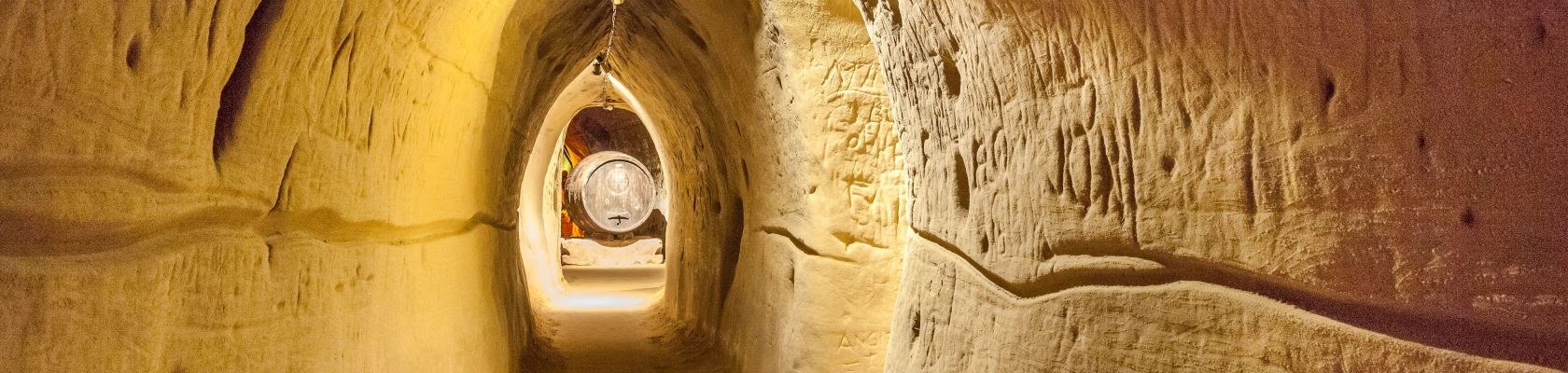
Abtauchen im Retzer Erlebniskeller
Der größte historische Weinkeller Österreichs
-
Retzer Erlebniskeller©
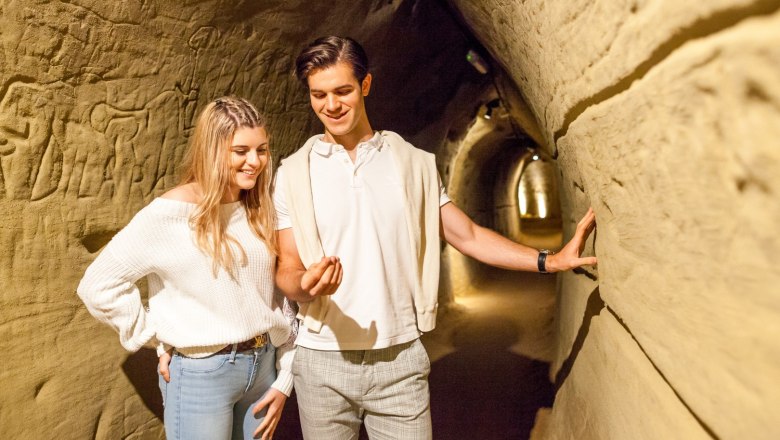

Ein weit verzweigtes Labyrinth unter der Oberfläche, drei Geschosse tief in Sand gegraben: unterirdischer Raum für Mythen, Abenteuer und Geschichten.
Der berühmte Retzer Erlebniskeller – ein einzigartiges, Jahrhunderte altes Bauwerk, ein fantastisches Labyrinth aus Röhren und Stollen, mit 20 km Gesamtlänge wesentlich dichter und weiter ausgebaut als das oberirdische Straßenverkehrsnetz. Bis zu 20 Meter tief sind diese Keller hier in reinen Meeressand gegraben, manche davon sind dreigeschossig angelegt.
Nur mit Kellerführer zu besichtigen!
Die aberzähligen Röhren des Retzer Erlebniskellers lassen sich nur mit einem professionell geschulten Kellerführer besichtigen – das dauert etwa eineinhalb Stunden und inkludiert einen historischen Rundumblick am Hauptplatz sowie ein gutes Glas Wein aus dem Retzer Land in der Vinothek im Hotel Althof.
Führungen
Mai – Oktober: täglich um 10:30, 14:00 und 16:00 Uhr, an Samstagen zusätzlich um 12:00 Uhr
Nov – April: täglich um 14:00 Uhr
Juli, August und September: Jeden Samstag um 11:00 Uhr: Erlebniskellerführung in tschechischer Sprache!
Červenec, srpen a září každou sobotu v 11 hodin prohlídka vinného sklepení v českém jazyce.
Wir bitten um telefonische Voranmeldung unter +43 2942 2700 oder um Onlinebuchung.
Sonderführungen gegen Voranmeldung außerhalb der angegeben Zeiten für Gruppen jederzeit möglich! (Gruppen unter 12 Personen bezahlen eine Führungspauschale von € 160,--)
Eintrittspreise
Einzel: € 15,- / Pers.
Gruppe (ab 20 Pers.): € 13,- / Pers.
Schüler (kein Wein): € 6,50 / Pers.
Kinder unter 6 Jahren: Eintritt frei
Freier Eintritt mit der Niederösterreich-CARD (gilt nicht bei Gruppenbuchungen)
Die Führung beinhaltet eine kurze Hauptplatzerklärung, eine Weinprobe (1/16l) und dauert etwa 1,5 Stunden.
Der Retzer Erlebniskeller ist aufgrund der baulichen Gegebenheiten als historischer Weinkeller nicht barrierefrei begehbar. Naturgemäß sind bei der Kellerführung im moderaten Schritttempo Stufen zu überwinden und ca. 1,5 km Gehweg insgesamt zu bewältigen.
Fremdsprachen: Die Führungen finden in deutscher Sprache statt. Für englisch- bzw. tschechischsprachige Individualgäste stehen kostenlos Audio Guides zur Verfügung.
Sonderführungen können in Englisch und Tschechisch gebucht werden.
Bitte beachten Sie: Ihre Bestellung ist verbindlich. Sie können von einer Ticketbestellung nur nach Maßgabe der eingeschränkten gesetzlichen Bestimmungen (ABGB, KSchG) zurücktreten, etwa dann, wenn Sie bei der Bestellung in die Irre geführt wurden oder die Bestellung unter Zwang erfolgte. Bitte beachten Sie: Ticket-Bestellungen unterliegen nicht dem Fernabsatzgesetz.
Öffnungszeiten Gästeinfo Retzer Land
Mai bis Oktober - täglich geöffnet:
Montag bis Samstag: 09:00 bis 17:00 Uhr; Sonntag 09:00 bis 16:00 Uhr
November bis April:
Montag bis Samstag: 10:00 bis 14:00 Uhr
An Sonn- und Feiertagen ist kurz vor der Erlebniskellerführung (ab ca. 13:30 Uhr) zum Kartenverkauf geöffnet.